

17 Jan Born in Foreign: Can You be Trini if you’ve Never Been Here?
Everybody wants to be a Trini. At least everybody who can claim its heritage by birth or ancestry. But what really defines a true Trinbagonian?
Is it someone who loves pelau, roti, crab and dumpling, pastelles, Soca, Parang, and bake and shark? Or is it someone who has walked a mile and a half in the average citizen’s shoes, and can not only recite a list of all things Trini, but also know the highs and the lows of life in T&T? How do we separate the wannabes from the true, born and bred Trinbagonian?
I’m sure that there are strong opinions on either side of this argument, and in my head I’m envisioning level cuss words getting pelted across the metaphorical fence. I’m also guessing that I’m about to draw the ire of many Trini offspring with what I’m about to say.
My first assessment is to say no. If you were born abroad and have never spent a day on T&T’s soil, you’re not a Trini. How can anybody be so arrogant as to claim to be a true Trinbagonian, if they have never touched down on our beautiful shores? How can they claim to be truly a part of what makes Trinidad and Tobago so great without having ever experienced it first-hand?
“How can they claim to be truly a part of what makes Trinidad and Tobago so great without having ever experienced it first-hand?”
Full disclosure… I was born in England when my parents were there studying, and moved to Trinidad when I was four years old. I’ve been living here since. I’ve sat SEA, O’ Levels and A’ Levels here, and I’ve experienced many of the things that tick us off about life in T&T.
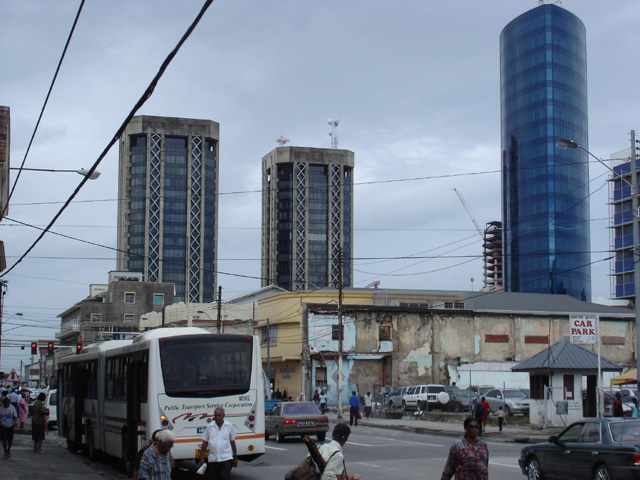
I don’t think that someone who’s never gotten a bad drive on the Eastern Main Road can really say they’ve experienced Trinidad.
If you haven’t stood in long lines at the bank during your lunch break, you haven’t experienced Trinidad.
If you haven’t had to fight to get into a maxi at the end of the day, you haven’t really experienced Trinidad. If you haven’t had to cuss about the delays on the ferry or the plane, especially if you were heading from Tobago to Trinidad for an important exam or interview, you won’t fully understand our (Trinidadians and Tobagonians) frustration with the service.
I know that these hardly sound like the highlights of ‘island life’, but we all know that these are vital parts of Trinbagonian life.
I’m not saying that a second or third-generation Trinidadian living abroad doesn’t know enough about Trinidad and Tobago. But hearing stories about the massive flooding in Port of Spain every time it rains, or fearing destruction in Delaford or Speyside, when a hurricane is on its way, and being there to wade through the water are two, very different things.
So much of Trinbagonian life is about experience. It’s about the collective consciousness of thousands of people understanding the never-ending frustration of choosing between the better of two evils for a government. It’s about standing in a long line, and voicing your approval when someone else starts to cuss about the wait. It’s about understanding that depending on who you talk to, it’s politically incorrect to refer to a Tobagonian as a Trini, or that as much as “side by side we stand”, we’re not exactly the perfect picture of unity. These are things that you can’t just know. You have to live them, and if you haven’t, then you can’t really, truly claim Trinidad and Tobago.
“We have a mindset that can only be learned through continued exposure.”
It sounds clichéd, but being Trinidadian/ Tobagonian/ Trinbagonian is a state of mind, and it’s not something you can pick up from listening to ‘tales of the olden days’. We have a mindset that can only be learned through continued exposure.
Many second and third-generation Trinis complain about feeling ‘put down’ by born and bred Trinis abroad. It’s common at universities where Diaspora come together to lime, and when someone starts claiming Trini heritage (in a non-Trini accent), they’re automatically demoted It’s hurtful for them to be told, “You’re not a real Trini”. However, if you call yourself a Trini and spell ‘mas’ as ‘mass’, honestly believing it’s the correct spelling, then you’ve unwittingly opened yourself to criticism. Even if you’ve visited T&T a few times that doesn’t automatically pull you out of the water.
By now, some may probably accuse me of being divisive, but I’m not. I’m simply calling it like I see it.
Case in point, Nicki Minaj. Even though she was born in Trinidad, as Onika Maraj, and lived here until she was around five years old, the interviews she gave about her recent trip home revealed that she was clearly expecting bush country when she stepped off the plane, and was amazed that we had highways just like in the US, and that it “didn’t feel like an island at all”.
While Nicki’s choice to leave was not her own, and I applaud the fact that she acknowledges her heritage, it is clear that she hadn’t made any effort to keep abreast of the goings on in Trinidad. Even though one can hardly expect a six-year-old to care about things like that, it would not be presumptuous to assume that as she got older she might have taken more of an interest in where she came from – especially since such a large part of her family still lives here (as we saw in her MTV documentary.) And it doesn’t mean that this won’t change. For all I know Nicki’s already planned her next trip home, and we’ll see her in the streets in Tribe for Carnival, but for right now, Nicki is as Trinidadian as Nia Long or Foxy Brown.
Even though I think that second-generation Trinidadians, who’ve never been to Trinidad can definitely acknowledge the Trini experience, as can second-generation Tobagonians who have never been to Tobago, when it comes down to it, they’re Trinbagonians in name only. Other than a few relatives of Trinbagonian descent, or in some cases a birth certificate, there’s nothing tying them to Trinidad and Tobago. There’s no emotional connection to this sweet, island nation.
So if you ascribe to my notion that unless you’ve truly experienced life in T&T, you can’t call yourself a Trini or Trinbagonian, then your answer, like mine, is no. If you’re not born and bred, you can’t claim to be Trini to the bone.

Catherine Young is a serious journalist in the same way that Bridget Jones is a serious journalist. When not obsessing about being a singleton, Catherine is pursuing her love of fashion and photography. Follow her at on Twitter @promiscuouslola.
Twitter •
Dhanny
Posted at 05:14h, 17 JanuaryWhen I saw the comment on Twitter, my immediate thought was, “SURE, why not??”. Especially if you have the parents who still eat red mango, cook callaloo and attend Carnival in which ever country they reside.
However, when I read the article, I must say that I had to agree with you on many points. Are you truly a TRINI if you haven’t visited. Maybe not….
My daughter is Trinidadian-Italian American born. She prides herself to be Trini but it wasn’t until she visited did she realise that her cousins don’t have the same lifestyle. We vacation home quite and she’s been lucky to experience the River scene, the doubles line, Beetham Highway (most tourist avoid that stretch).
That being said, her friend who is born of Trinidad parents, lives more of a Caribbean lifestyle here in the US than my daughter but has never been to Trinidad. She plays Carnival in Brooklyn, my daughter doesn’t. They play Calypso in their house right after Christmas, I don’t. I listen to it on my own.
So who is the truer Trini?? I think it’s a question or CRITIQUE that only you true born and raised Trinis can answer. You’re the ones who judge US. I’m a removed Trini but I love my heritage and it was important to me to raise my kid with some knowledge of the special beauty our culture holds.
camille guy
Posted at 05:57h, 17 JanuaryI do not think that you should call yourself “Trini to d bone” unless you have actually lived there. Being born to Trini parents does not make you a Trini. Living and experiencing the life does. Being a Trinbagonian is not just about soca and fete and Carnival. It is not about eating crab and callaloo and pelau or roti. It is about experiencing the life and place that gives rise to the “Trini mentality”. We(the natives) laugh at the way Trinbagonians tend to joke and party through adversity. (I mean where else could there be full-scale curfew fetes during and directly after a coup). Outsiders do not understand that laissez faire devil-may-care attitude. Until they experience the hour long wait to get banking done, the 2 or 3 day water schedule, no water in the pipe in rainy season and a ferry that takes hours and always breaking down and all the other little things that are/were normal everyday irritations. If you have not experienced these things you are missing the experiences that make us definably Trinbagonian. I am sure other people can find other experiences that temper the Trinbagonian soul. I do know that my children though exposed to Trinbagonian culture, do not consider themselves Trini to D bone. They consider themselves Americans with Trinbagonian heritage. Maybe when they go to the islands themselves and spend time living there they may assume that title but till then….
Rum
Posted at 11:25h, 17 JanuaryYeah i dont think youve quite ironed out the nuances in your question.
Is someone a Trini if they have the accent, can spell in local dialect, have lived here their whole life, been on the MV Tobago, knows to drink big red with their doubles, yet even with all this and more has a total disregard for the other Trini people they live with and commits crime/murder/robbery/kidnapping. Are they more worthy of being a trini than the law-abiding trinis in the diaspora who’ve may have only visited, but have a nostalgic longing for the country of their parents who you dont think are trinis?
I do think people have to have lived here for a little bit of time, certainly. But is your answer “that unless you’ve truly experienced life in T&T, you can’t call yourself a Trini or Trinbagonian”, really satisfactory? It is so vague. its also not fair for you to dictate the identity of others. Identity is on many levels a personal commitment and choice. It becomes a subjectivity when power and other people tell you what you are and what you are not. Something you are doing.
Questions of nationhood and nationalism are very complicated. My question above is one of many more i could bring up in relation to your article. Overall your question is no doubt interesting but your discussion is too simplistic for me and only the tip of a much bigger conversation about identity in the 21st century.
camille guy
Posted at 07:20h, 19 JanuaryIt is not about the accent etc. These are simply outward trappings. The question is can one truly identify themselves as being of a culture when they have never fully experienced it. If you have not experienced the life of the group you are claiming to belong to how can you understand the way their brain works. Those people who have largely grown up outside of TnT and have never returned will not understand why we think as we do. It has nothing to do with deserving to be called Trini. It is who you are. Sooner or later something will be done or said that they do not understand and they will feel like an outsider. Sorry it is not done maliciously to make you feel “other”. And until you have immersed yourself in the culture for a while it will continue to happen. Now I do believe it is possible to become Trini, unlike other people I have spoken on the subject. All it takes is time and the willingness to immerse yourself in the culture for an extended period of time. After six months to a year. I think that you would have experienced enough to be able to not just know but understand the “Trini in you.”
Paula Lindo
Posted at 02:10h, 20 JanuaryMy mom’s Trini, but I was born and raised in Jamaica. I’ve been living in Trinidad for the last 4 years. Do I have Trini status yet? I think I do based on the article 😀
rhl25
Posted at 19:21h, 01 NovemberI have a simple test. I start singing, “Girls? -Yes! Girls? -Yes! Girls?-WHAT?”
And if someone sings along, then they’re a Trini to me. It’s that simple.