


23 Apr Seeing Ourselves in our Favourite West Indian Novels
The few West Indian novels I studied in school have a special place in my heart, because they were some of the only books that I could see myself reflected in.
I love “Harry Potter” and “The Hunger Games” as much as anyone, but none of them remind of me running barefoot through the streets of Tobago, during school vacations with all my cousins, or spending days climbing trees during plum season, and staining my shirts with the juice.
I love “Harry Potter” and “The Hunger Games” as much as anyone, but none of them remind of me running barefoot through the streets of Tobago
Trinidad and Tobago, and the Caribbean at large, is home to some of the world’s most talented authors. Unfortunately, once CXC is over, our exposure to their work ends. I may be wrong, but I don’t think any West Indian novels are taught at CAPE level, although that may have changed since I sat exams.
One of the biggest issues that I’ve had to face while living in the US for the last few years is recognizing that there are very few places where I can find validation for the childhood that I had. Tales of bush tea and bathing from buckets are met with strange looks from my US friends, and, unfortunately, they feed into the stereotyped views of a backwards, Third World country.
Even though I know that experiences like those are not only normal in the West Indies, but also hark back to a simpler, more peaceful Trinidad and Tobago, it is taxing to be told that your roots and your history make you less than. The interesting thing is, a number of West Indian novels deal with precisely this theme.
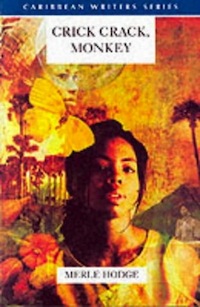 Merle Hodge’s “Crick Crack Monkey” is a top pick for me. It’s about Tee, a young girl, who finds herself torn between the warmth and love of her Tantie’s home, and the coldness, pretention and discrimination that she learns from her Aunt Beatrice, with whom she goes to live after winning an academic scholarship.
This book was the first one that gave me a realistic glimpse into the Trinidad that my grandparents lived in. For the first time, I was able to see where some of the class separations that still exist today began, and how they were derived from a colonial society.
Tee’s father immigrated to England, which Aunt Beatrice sees as the height of civility. She models her life and her brand of discipline against a European standard, and subtly abuses Tee and her younger brother for not understanding why the simpler values she learned from Tantie were no longer acceptable.
It was a great story about adolescence and the loss of identity, and it has a message that I think is still relevant today.
Trinidad has become increasingly Americanized. It is very easy to see that we hold ourselves to a foreign standard that does not necessarily apply to us, the same way that Aunt Beatrice does. This is the same reason why our young people sneer at their past, and don’t have an understanding that it’s that very past that made the future possible.
But social class isn’t the only theme that our West Indian novelists tackled.
I remember “Green Days by the River”, the protagonist Shellie, and his teenaged love problems. They also reminded me of the various romantic entanglements I had at that age, and how serious and life ending they all seemed in the moment. Though I can laugh at myself now, I can relate to that feeling of not knowing where life would take you.
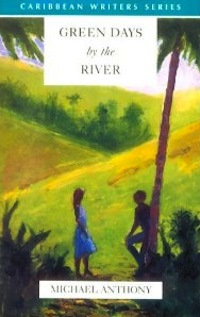 This was another book that reminded me of months spent in Tobago with family, and days spent walking back and forth between my relatives’ houses for various meals. For some reason, only the boys’ schools ever seemed to study it, though, so I read it during free time at dance rehearsals.
Now that I’ve just finished studying abroad, “Harriet’s Daughter” is another novel that I not only remember fondly, but also relate to. I read it in form two for literature, and it was taught by my favourite teacher of all time. (Go Ms. Tewarie!)
“Harriet’s Daughter” is about Margaret, a second-generation West Indian living in Canada who begins to identify with her roots and her heritage by latching onto the heroism of Harriet Tubman. Margaret’s school friends are mostly white, while she is black, and she is fascinated with her mother’s ability to speak dialect, even though she pretends she can’t. However, encouraged by her new friend Zulma, a recent transplant from Tobago, Margaret begins to learn about herself and her heritage and start repairing her relationship with her parents.
This novel deals closely with the issue of being ‘an other’, based on your background. The culture shock of being a West Indian in the US is something that my friends and I have been whining about for four years now. Oddly, it has made us hold onto our heritage, even more fiercely than before. We dare you ask us if Trinidad is in Jamaica, or if we live in trees. Don’t laugh. We get those questions all the time.
West Indian literature gives me a sort of escape and reality all at once. This is just a sampling of the books I loved, but I also loved “The Dragon Can’t Dance”, “Annie John”, “A House for Mr. Biswas”, “Miguel Street”, and “A Thirst for Rain”.
Trinidad and Tobago should spend more time investing in the literary arts. I love the public library in Port of Spain, and I still visit whenever I come home. With the way that life in Trinidad has changed over the last decade, the Trinidad and Tobago of our parents and grandparents is unfortunately only accessible in these novels. We should be making fond memories reading the books that reflect our lives, instead of not reading at all.
How about a national West Indian literature month? Get schools and libraries involved. Encourage our children to read the novels written for and about us. Make it so that even bookworms like me don’t have a hard time remembering the novels that did not make it into the syllabus, and don’t have to go searching on their own to learn about our culture.
These days, it’s becoming clearer that we cannot expect the current tastemakers to reflect the experiences that we have had. That’s why we need to encourage today’s youth to create, innovate, and bring forth art and literature that reflects the life that we know.
Image credit: caribbeanreviewofbooks.com

Catherine Young is a serious journalist in the same way that Bridget Jones is a serious journalist. When not obsessing about being a singleton, Catherine is pursuing her love of fashion and photography. Follow her at on Twitter @promiscuouslola.
Twitter •
Jolisa Brewster
Posted at 12:43h, 23 AprilI could definitely relate to this one…loved reading all my literature books before the start of school term, most of them have already been mentioned. Lovely article!
Amanda Choo Quan
Posted at 13:55h, 23 AprilThank you SO MUCH for this! I’m a Trinidadian trying to secure a Fulbright for an MFA in Creative Writing, and have been trying to articulate why reading and writing about ourselves is so important. I remember reading some of my pieces to a workshop in Texas, and those writers were stunned–there is basically a lack of contemporary Caribbean fiction available to us and to them, which presents us with an enormous opportunity. Walcott and Naipaul and Lovelace have gained so much worldwide recognition and respect, and have set the precedent that others are waiting to see us follow. So why don’t we? Why do I have to turn to novels from other countries if I want to read about things that are happening to me, a young person living in 2012? That said, there are some notable writers that have come out of the Caribbean in recent times that are worth reading…Edwidge Danticat from Haiti comes to mind, Tiphanie Yanique from the Virgin Islands, Kwame Dawes who is from Jamaica by way of Ghana.
Analise Dougla Duchess K
Posted at 15:48h, 23 AprilTo Sir with Love, The Hummingbird Tree.
Camille Winchester
Posted at 15:52h, 23 AprilThe Wine of Astonishment, The Year in San Fernando, The Wooing of Beppo Tate, Jumbie Bird, Te Jean and his Brothers
Cherysh Le-Anne La Touche
Posted at 15:52h, 23 AprilGreen days by the river
Lisa Heidi N
Posted at 15:56h, 23 AprilGreen days by the River. Yes Cherysh..
Quilin J Achat
Posted at 16:09h, 23 AprilYear in San Fernando. who remember “Baba & Mr. Big” ? 😀
Camille Winchester
Posted at 16:13h, 23 AprilDoes anybody remember Adventures up the Caribbean? It was one of my favs in Jr. Sec.
OUTLISH Magazine
Posted at 16:22h, 23 AprilI still have Wooing of Beppo Tate on my bedhead. Love all the ones you all mentioned. Loved Elizabeth Nunez’s “Discretion” and “Under the Limbo Silence”. Loved “All that Glitters” by Michael Anthony. – Karel
Marsha 'Iron Tay' Edwards
Posted at 16:22h, 23 AprilCosign Cherysh! If only I can put my hands on that book again!
OUTLISH Magazine
Posted at 16:24h, 23 AprilCamille Winchester never heard of that one. Will check it out. Marsha ‘Iron Tay’ Edwards library or look for a used copy on Amazon.
Marsha 'Iron Tay' Edwards
Posted at 16:27h, 23 AprilAhead of you OLishious!!! Found it on amazon.ca $16.06.
Marsha 'Iron Tay' Edwards
Posted at 16:27h, 23 April…..cart: purchase!!!!
Marsha 'Iron Tay' Edwards
Posted at 16:30h, 23 AprilOh shims!! Look Nelson West Indian reader. Oh the memories!!!
Lisa Heidi N
Posted at 16:38h, 23 AprilThe best book of all time despite not Carribean, I ever read in school was ” To kill a Mockingbird”… 15 times I have read that book and still in awe of its characters ..
TriniJax
Posted at 19:19h, 23 AprilSo proud of my cousin – blossoming into a talented young woman! Congrats Catherine!
Ronald Peters
Posted at 00:09h, 24 AprilMiguel Street is the funniest book I ever read. Laughed till I cried, the best.
Crista Patricia Daniel
Posted at 00:50h, 24 AprilMiguel Street and TiMarie
Carla
Posted at 16:28h, 30 AprilMaybe there would be greater appreciation for West Indian books if we worked towards building an interest in local and regional books from a young age. Whilst I do appreciate the article, I do hope that I am not the only one who noticed that it highlighted a huge flaw in our society! We seem to associate “West Indian novel” with books that we study at school. Perhaps it is this very location of West Indian novels that account for their underrated status. If students only read local books at school through obligation, they will not make a link between reading local and reading for pleasure and once school days are over, the books are tossed aside and forgotten.